Home
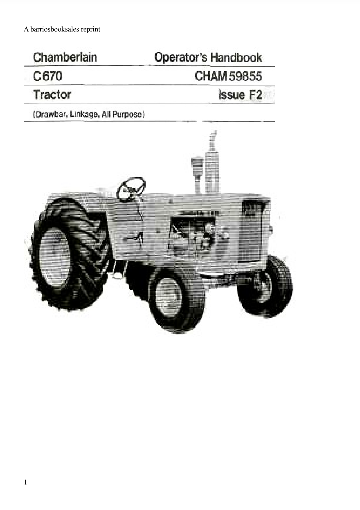
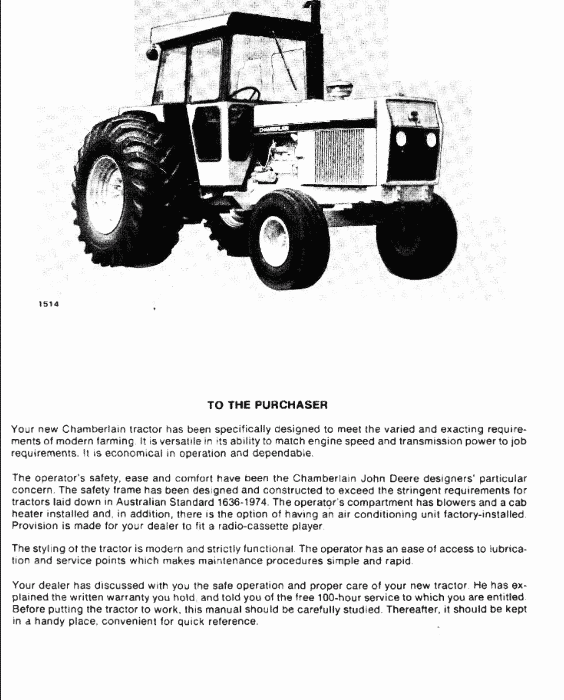
chamberlain tractors
ford fordson tractor info
hart-Parr,Cletrac, Oliver tractors
Ferguson stuff
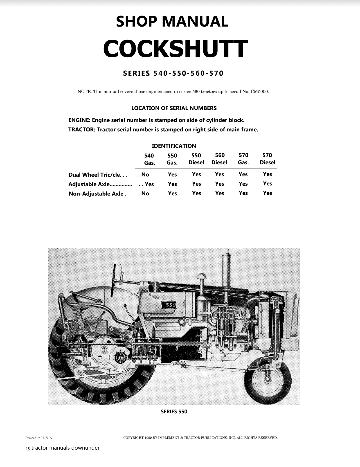
tractormanuals
Magnetoes
Chainsaws
battery info
Chev V8 diesel engines
Lanz & KL bulldogs
Lanz and KL bulldog tractors
australian bush poetry
help when buying any product.
petroloxygencutting

you can buy online any of our books or manuals.


COMPLETE INSTRUCTIONS AND PARTS LIST FOR CARE AND OPERATION OFTYPE EK WICO MAGNETOS

WeCO-BUILT IGNITION

WEST SPRINGFIELD, MASSACHUSETTS

WICO ELECTRIC COMPANY, WEST SPRINGFIELD, MASSACHUSETTS, U. S. A.Service Instructions for Type EK WICO MagnetoThis book contains complete instruction for caring for the Type EK WICO Magnetos and also explains how they operate, so that the man who uses them can thoroughly understand them. The Type EK WICO Magneto is a very simple device that every engine runner can keep in order as easily as he can any part of his engine. This book is written for the express purpose of making this fact clear to every user of WICO Magnetos.It sometimes happens that trouble arising from defective spark plugs, poor fuel mixture, and other causes, for which the, magneto is not to blame, is attributed to the magneto. If these instructions are followed, when trouble occurs, the responsibility can be definitely placed and time saved.

Fig. I—Magneto. Moving Parts removed

The distance between spark plug points should be from .01) inches to .02) inches (the thickness of five or six sheets of paper.) The insulator (Porcelain or Mica) inside base of spark plug must be kept clean (free from carbon), because the electricity from the magneto leaks through the carbon on the insulator instead of jumping across the points, and makes it hard or impossible to start the engine or makes it fire irregularly. Excessive oiling of engine and too rich a fuel mixture may deposit carbon on the insulator. Use a thin knife blade, a rag, and gasoline for cleaning. A plug will sometimes show a spark when tested outside of the cylinder and yet fail to fire the engine when replaced in the cylinder. This shows that the plug is "leaky", because of carbon or because the porcelain insulator is cracked. A "leaky" plug will spark outside the cylinder and not inside because the spark can jump through the air easier than it can jump through the compressed charge inside the cylinder, especially when the engine is cold.Clouds of black smoke from exhaust indicate too rich a mixture. Screw needle valve in a trifle until smoke disappears. If engine misses or fires back through carburetor or mixing valve, mixture is too lean. Screw needle valve out a trifle. If engine does not fire regularly mixture is probably too rich. Too rich a mixture will waste gasoline and carbonise engine and spark plug.

HOW TO START (See Figures II, IV, V and VII)Put advance lever (403) in the starting position (See Figure II for Type No. 1 drive. Figure IV for Type No. 2 drive, and Figure VII for Type No. 3 drive) Be sure the spark wire (Figure 1). is connected to the spark plug. If engine is provided with a priming cup, prime engine by pouring a small amount of gasoline into the cup and letting it flow into the cylinder. If there is no priming CUD, instructions accompanying engine will show how to choke air intake for same purpose. Turn flywheel in thedirection in which it will run. If engine does not start after turning a few times, prime with a little more gasoline. If the engine then fails to start remove spark wire from spark plug, release compression by holding intake valve open also open priming cup, and spin the flywheel rapidly a few times to blow out excess gasoline, due to priming charge being too heavy. (Removal of spark wire is to prevent ignition blowing back when Intake valve is open and starting outside fires). Then prime engine again, using less gasoline than at first, and again turn flywheel in direction in which it will run. In extremely cold weather, a much heavier priming charge can be used safely. Engine failing to start in hot weather, especially when they are warm, are usually primed too heavily and require blowing out as described above. After engine comes up to speed, move the advance lever (403) to the running position. (See Figure II for Type No. 1 drive, Figure IV for Type No. 2 drive and Figure VII for Type No. 3 drive.)

METHODS OF DRIVINGThere are three general types of drive for the Type EK WICO Magneto:—Type No. 1. Eccentric and Strap Drive (See Figures II and III). Type No. 2, Push Rod Drive (See Figures V and VI). Type No. 3. Combination Drive (See Figure VII).

Fig 11. Number one drive. Armature ready to trip, advance lever retarded.

TYPE NO. 1 DRIVE [Fig 11 and 111]In the Type No. 1 Drive the Magneto is operated by an eccentric and strap from the crank shaft or half-time shaft of the engine. There are several forms of this drive, but they are all the same in principle. The armature (100) is held against the cores (107) by the return spring (97) and by the magnetic attraction of the cores. The spark is produced by pulling the armature about 1/16” to 3/32" away from the cores (This is called "tripping”

fig 3 type number 1 Armature tripped advanced lever retarded

the armature). This is done by drive spring (186) which bears against the end of the rocker arm (406) and is compressed as the eccentric turns until finally the trip shoulder (F) inside the spring bottoms against the end of the rocker arm and instantly breaks the magnetic contact between the cores and the armature which is then snapped away from the cores by the compressed drive spring. As the eccentric continues to revolve, the pressure of the drive spring is relieved and the return spring (97) draws the armature back to the cores again where it remains until the proper time for again making the spark.Timing ControlsThe time of the spark is controlled by the advance lever (See Figure II) which adjusts the rocker arm bark and forth with relation to the trip shoulder (See F, Figure III). The advance lever can always be set in two positions (advance and retard) and on. some engines it can be set in a third position (cut-out) which will prevent the armature from tripping and thus no spark will be produced.The advance lever should be in the retard position for starting and in the advance position for running.

Armature OpeningsWhen the magneto is installed on an engine the eccentric should be properly located on its shaft, so that proper spark control may be secured with the least opening of the armature when the engine is at full speed. Large armature openings are undesirable because they put unnecessary strains on the wearing parts. The maximum armature opening should not exceed ¼”

Eccentric settingsFor reversible engines, when the piston Is at the end of its compression stroke, the eccentric should be at its point of maximum throw towards the end of the rocker arm.For non-reversible engines (both 2-cycle and 4-cycle), when the piston is at the end of its compression stroke, the eccentric should be 23° to 30° before its greatest throw towards the rocker arm (See Figure II). In other words, when the eccentric is properly set on 2-cycIe non-reversible engines, the flywheel will have to be rotated 29° to 30° beyond compression center before the eccentric reaches its greatest throw towards the rocker arm, and in 4-cycle engines the flywheel will have to be rotated 30° to 60° beyond compression center before the eccentric reaches its greatest throw towards the rocker arm. because in 4-cycle engines the flywheel rotates 2 degrees to the eccentric's I degree; while in 2-cycle engines the flywheel rotates 1 degree for every degree that the eccentric rotates.If this setting of the eccentric is used, the necessary movement of the advance lever to provide the proper advance can be accomplished without giving the armature so great a throw that it will leave the poles more than ¼

Timing AdjustmentsThe lock nut (E) is for the use of the engine builder after properly timing the magneto when it is installed on the engine. CAUTION: Engine users should not tamper with this nut unless it becomes necessary to adjust the time of spark, and then the trip rod should be moved only enough to insure that the magneto trips at the end of the compression stroke when the advance lever is in the starting position. Tighten lock nut after this adjustment

Return Spring AdjustmentThe adjusting nut (G) on the end of the eccentric rod is for the use of the engine builder for properly setting the return spring (97).CAUTION: Engine users should not tamper with this nut unless it has to be removed for some purpose. In such cases replace-it as follows:—Set the advance lever in the cut out position (See Figure II). or in the retard position, if the engine has no cut-out position, and turn the flywheel until the driving eccentric is at its point of greatest backward throw from the rocker arm (406). Then set up the adjusting nut (G) until the return spring (97) is completely closed up, then unscrew the nut one turn and lock in place.

TYPE NO. 2 DRIVE(See Figure* V and VI)This drive is designed for operating the magneto from the valve push rod of the engine by means of the trip finger (404). The armature (100) is held against the cores (107) by the return spring (97) and by the magnetic attraction of the cores. The spark is produced by pulling the armature about 3/32" away from the cores. (This is called "tripping" the armature). As soon as this is done the armature is released ("latched off") and the return spring quickly lifts it back to the cores. The movement of the armature is accomplished so rapidly that it is on the cores about 95% of the time. In Figure V the armature is shown in contact with the cores ready to trip, and drive spring (186) compressed.

403starting and running positions of lever

In Figure VI the armature is shown away from the cores and the trip finger about-to "latch-off", and release the armature for its return to the cores.The armature is tripped (pulled down) by the rocker arm (406) when it is engaged by the trip finger on the push rod. After the armature has moved down 1/8", thus opening the breaker points (See Figures VI and IX), the "latch-off" screw (419) disengages the rocker arm from the trip finger latch (404) and the return spring replaces the armature on the cores. The' trip finger latch bears against a spring (186), and when the latch engages the rocker arm this spring is compressed until the end of the latch-rod bottoms against the advance lever (403) (See Figure V) and by so doing trips the armature. Then the compressed spring drives the latch forward and thereby gives a very rapid movement to the armature.

TYPE NO. 3 DRIVE The time of the spark as controlled entirely by the advance lever (403) which can be set in either of two positions. When the handle points straight out from the engine (See Figure IV) the spark is retarded for starting. When the handle points downward (Sec Figures IV and V) the spark is advanced for running.

Timing AdjustmentsWhen the magneto is installed on the engine, the proper timing is secured by locating the bracket which supports the trip finger, shown in Figure IV, at such a position on the push rod that the magneto trips at the end of the compression stroke when the advance lever (403) is. in the starting position.Engine users should not tamper with the setting of this bracket unless it is found that something has occurred to make the magneto trip otherwise than above.

The Type No. 3 drive is a combination drive, possessing some of the features of each of the No. 1 and No. 2 drives. This drive is operated from the valve push rod as in the Type No. 2 drive, except that there is no "latch-off" of the trip mechanism, and the drive spring (186), return spring (97), rocker arm (406) and trip shoulder (F) operate in exactly the same manner as in the Type No. I drive. The lock nut (E) is provided for locking the trip rod in position when timing the magneto as in the Type No. 1 drive.

Type number 3 drive.

The spark advance is obtained by means of an advance lever attached to the rocker arm. To advance the spark the advance lever is pushed down into position between the rocker arm and the trip washer, thus the trip shoulder bottoms against the rocker arm earlier in the rotation of the cam.The proper dimensions for the rocker arm and ignition rise on the cam will be determined. by the Wico Electric Company for each particular type of engine.

CARE OF TYPE EK, WICO MAGNETOSThe following simple instructions for the care of the Type EK WICO Magneto tell all that you need to know to keep it in perfect condition. Follow these instructions exactly and do not experiment.The need for making adjustments or replacements will seldom, if ever, arise, but all parts of the magneto arc so accessible that adjustments and replacements can easily be made when required.

MAGNETSDo not remove the magnets (141) (Sec Figure VIII). You will instantly destroy their magnetism and gain nothing, because every part of the magneto that may conceivably require renewal can be replaced without removing the magnets and without weakening them.

MOVING PARTSAll moving parts (See Figure I) can be withdrawn from the magneto by lifting the armature (100) from its magnetic contact with the cores (107). This operation does not weaken the magnets. When replacing the armature make sure that the oil pad (266) slips over the guide rod (157),

REMOVAL OF COVERSThe covers of the magneto are held in place by the band (20) which is fastened by four screws (199), two at each end of the magneto. The removal of these screws allows the band to be lifted and the covers to be removed.

OILINGThe Type EK Wico magneto will last for years if properly oiled, but if allowed to run dry its life will be very much shortened. The drive mechanism should be oiled each day the engine is used. When the engine is being used every day, oil the magneto at the marked oil-hole (See Figures 3,6 and 7) once a week with the regular engine oil. If engine is not used every day oil the magneto less often.

CLEANINGWhere Type EK WICO Magnetos are to be used in the open, dirt and grit will collect on all of the exposed portions of the machine. This is to he expected and no decrease of the spark strength will he caused thereby. If, however, the working parts are kept clean their life will be prolonged. After many hours oily muck may have collected inside (be breaker point tube aroundthe upper contact, and this may slightly weaken the spark. Remove, the front cover. (See Removal of Covers) withdraw the moving parts (See Figure 1) and with a clean rag and a small hardwood stick wipe off the oily muck wherever it has gathered.

Flq. IX—Breaker Point Details

operation, if the magneto has been oiled frequently and heavily,

ADJUSTMENTSBreaker Points(See Figures II, V and IX)The breaker point contacts are perfectly adjusted at the works of the Wico Electric Company, and no re-adjustment will be requiredthrough thousands of hours of use, except when installing new contacts, at which times proceed as follows:—On engines using the type No. 1 Eccentric and Strap Drive the breaker point contacts (223) and (301) should just open when the armature (100) is about 1/16" away from the cores (107) On engines using the type No. 2 Push Rod Drive or the typ No. 3 Combination Drive the breaker point contacts (223) and (301) should just open when the armature (100) is 3/32* away from the cores (107).To adjust contacts, withdraw the moving parts and loosen the lock nut (302) (See Figure IX) on the stem of the breaker point Replace the moving parts and insert metal strips either 1/16" o 3/32" thick (See above) between the armature and the face of the cores. Hold the contact (223) from turning by inserting key in the slot (D) in its side. Turn the screw (173) until the contact (223) just fails to touch the contact (301). Then remove the armature from the magneto and set up the nut (302' tight against the lock washer and contact, taking care that th« screw does not turn in the contact while doing this. Replace armature and check this adjustment.As soon as adjustment has been made, be sure to remove the strips that you placed between armature and cores.Latch-Off at Trip Finger: «(Sec Figures V and VI)The rocker arm (406) of the Type No. 2 Drive is provided with a screw (419) and lock nut for adjusting the "latch-off" of the trip finger. This screw must be set so that the latch (404) will slip off the lip of the rocker arm just after the breaker point have been opened by the downward movement of the armature If the screw is screwed OUT too far the breaker points will not open and the magneto will not spark.If the screw is screwed IN too far the trip finger will drive the armature down too far and possibly break the return spring of the parts that hold it.This adjustment will be made originally by the engine builder and should not require attention thereafter. IT HAS NOTHING WHATEVER TO DO WITH THE TIMING OF THE SPARK If necessary the adjustment can be made as follows:—Trip the armature (100) from its contact with the cores (107) and insert strips of metal 3/32" thick between the armature and the face of the cores. Move the push rod slowly until the latch of the trip finger reaches the rocker arm. The edge of the latch should then just engage the edge of the latch block (5) on the rocker arm, and the adjusting screw (419) should be bearing or the top side of the latch (See Figure VI), so that the leas further movement of the push rod will cause the latch to slide off the latch block.If the latch does not engage the latch block when the armature is set as above, the adjusting screw should be screwed in until the latch just engages. If the latch engages the latch block too much (more than 1/32"), unscrew the adjusting screw to GIVE the proper engagement. Loosen the lock nut on the adjusting screw (419) before attempting to change adjustment and be sure to set it up tight after the adjustment has been made. Before attempting to start the engine, remove the metal strips which were placed between the armature and the cores.

REPLACEMENTSBreaker Points;(See Figure IX)The best results will be obtained 'if both contacts are renewedwhenever one of them fails. If either contact fails it may leavethe other in such uneven shape as to spoil a new contact.

To replace moving contact (223):—-Withdraw the armature ground (See "Moving Parts"), loosen nut (302) and unscrew the contact (223.) from the screw (173). Screw on the new contact, being careful to replace the lock washer between the contact and nut.To replace fixed contact (301):—Remove the front cover and withdraw the moving parts (See Figure I). Disconnect condenser lead (S) and primary lead (217) from breaker point tube (OB) (See Figure IX). Remove all nuts and washers from shank of the contact (301) and push contact down And out of tube. Thereare two insulating washers (168 and 184) inside of tube and these should be removed also. New insulating washers (168 and 184) and new nuts will be supplied with each new fixed contact and these should always be used in replacements. Place insulating washers on new contact and insert in tube, replace outside insulating washer, cover it with the lock washer and screw the nut up tight. Replace the two washers (240 and 238) and the nut (N). Insert the two leads and set the nut up tight. Replace the moving parts (be sure the felt pads 266 are in place) and check up the adjustment of breaker points as explained under "Adjustments." Be sure the nut 302 is set up tight

Spark Wire (See Figure X)The spark wire on the latest type of magneto is provided with a spring clip soldered to the end of the wire which snaps into the terminal block (30). To replace the spark wire it is only necessary to pull the old wire out of the terminal block and push in a new wire.In some of the earlier magnetos the wire is provided with a threaded sleeve on the inner end, which screws into a shouldered brass washer in the terminal block (30). To replace this spark wire, it is only necessary to unscrew it and insert a new wire and screw it up tightly into place. Spark wires are provided by the manufacturer with the threaded sleeve in place on the end of the wire.

Fig. X—-Section Showing details of high tension Terminal

Latch and Latch Block (See Figures V and VI)If the edge of latch (404) of Type No. 2 Drive becomes worn where it engages latch block [5] a fresh edge can be obtained by clamping the latch in a vise and pulling it out of the trip finger and giving it a quarter turn before replacing it. A fresh edge on the latch black (3) may be obtained by loosening the latch block screw and giving the latch block a quarter turn before replacing it. The screw is headed over at its outer end and the heading should be filed off before attempting to loosen the screw, Be sure to replace the lock washer and set screw up tight. The latch-off screw (419) should be removed to get at the latch block screw. After the latch block is replaced, the latch-off adjustment should be made as described under "Adjustments.”

TROUBLE HUNTINGIf ignition trouble is suspected disconnect spark wire from plug and observe spark between wire and engine frame, by holding end of wire about 1/8" from frame while cranking engine. If no spark is produced when magneto is operated, the trouble can be located by proceeding as follows:-—See that the armature (100) returns and makes a firm contact with the cores (107) after being tripped off.Failure to make firm contact indicates a weakened or broken return spring (97) or friction of moving parts caused by lack of oil. Remove any dirt from between armature and face of cores.Turn the flywheel over slowly and see that when the armature (100) is tripped it snaps quickly away from the cores (107). Failure to do this indicates binding or friction or a broken drive spring (186). *Remove the front cover and use a small wire or piece of wood to remove any dirt from the surfaces of the contacts (301 and 223) and from the insulating washer (168) (See Figure IX). See that electrical connections are tight at points A and B (See Figure VIII).Check up the "latch-off" of the trip finger in Type No. and if wrong, make it right (See "Adjustments").

Drive 1A trip finger

When renewing any part of this, trip finger adjust as follows: Assemble trip finger as shown in Assembly 413-H. When drive spring is fully compressed as shown, that is, with washer No.396 in contact with tube No, 398, screw down nut No. 397 until spring 97-M is neither loose nor compressed. Then lock with second nut No. 397; or if there is only one nut, rivet end of rod to prevent loosening of this nut.

WIC type EK MAGNETOThese instructions state briefly how to take care of the Type EK Magneto, and state how to remedy all probable troubles.If unusual circumstances arise, reference should be made to the Type EK Instruction Book, which gives more complete information . about the Type EK

OilingOIL MAGNETO EVERY WORKING DAY with the same oil that is used in the engine cylinder. Special oil is not required. There is little danger from excessive oiling.

CLEANING. A magneto used constantly in the open will in time become caked with dirt and grease. This condition will cause no decrease in spark strength. If, however, the working parts are kept clean, the life of the magneto will be prolonged. Occasionally remove the front cover of the magneto and also the moving parts and clean around the breaker points with a clean rag and a small hardwood stick. Keep points of contact between the armature and the cores dean by wiping with a clean rag.

MAGNETSDO, NOT REMOVE THE MAGNETS. It is unlikely the magnets will ever need re-charging unless they are-removed from the machine .

MOVING PARTSAll moving parts can be withdrawn from the magneto by lifting the armature ( 100) from its magnetic contact with the cores (107). This operation does not weaken the magneto. When replacing the armature make sure that the felt oil pad slips over the guide rod; and also see that the breaker point contacts are clean, and that there is a good film of oil on the side of the body and spring.REMOVAL OF COVERSThe covers of the magneto are held in place by the band which is fastened by four screws, two at each end of the magneto. The removal of these screws allows the band to be lifted and the covers to be removed.

WICO MODEL XH-1 FLANGE MOUNTED MAGNETOWICO SPEC No. XH.1295D (Replaces XH-1295C) WISCONSIN No. Y-68A used on ABN, AKNOBSOLETE MAGNETOS XH-1295 (WIS. Y-57), XH-1295Y (WIS. Y-57C), XH-1295B (VMS. Y-68)WICO SPEC. No. XH-1995B (Replaces XH-1995) WISCONSIN No. Y-62 used on AENINSTRUCTIONSTIMINGThe magneto is properly timed to the engine at the factory. If it becomes necessary to retime the magneto to the engine, refer to the diagram and instructions in the engine instruction book.LUBRICATIONThe only lubricating point in the magneto is the cam wiper felt, (Ref. No. 19). This felt, which lubricates the breaker arm at point of contact with the cam, should be replaced whenever it is necessary to replace the breaker contacts.IMPORTANTIncorrectly adjusted spark plug gaps cause magneto failure more frequently than any other condition.Sparkplugs should be inspected at frequent intervals, the size of the gap should be carefully checked and adjusted and the plugs thoroughly cleaned.All oil, grease, and dirt should frequently be wiped off the magneto, lead wires, and spark plug insulators. Keeping these parts clean and the spark plugs properly adjusted will improve the engine performance and at the same time will prolong the life of the magneto.MAGNETO COVERThe magneto cover, (Ref, No. 50), can be removed by loosening the four screws (Ref. no. 36) which hold it in place. When replacing the cover be sure that the cover gasket (Ref. No.35) is in its proper place.

BREAKER CONTACTS - REPLACEMENT AND ADJUSTMENTThe breaker contacts should be adjusted to ,015” when fully opened. To adjust the contacts, loosen the two clamp screws (Ref. No. 40) enough so that the contact plate can be moved,Insert the end of a small screw driver in the adjusting slot and open or close the contacts by moving the plate until the opening is .015”, measuring with a feeler gauge of that thickness, tighten the two clamp screws.To replace the contacts remove the breaker spring clamp screw (Ref. No.43) the breaker arm lock andwasher (Ref. No. 18) and (Ref. No. 14), then lift the breaker arm from its pivot. Remove the aligning washer, 5717, and the two fixed contact clamp screws (Ref. No. 40). The breaker plate can then be removed.If the contacts need replacing it is recommended that both the fixed contact and the breaker arm be replaced at the same time, using replacement breaker set X5996 (Ref. No. 42).After assembly the contacts should be adjusted as described above. The contacts should be kept clean at all times. Lacquer thinner is an ideal cleaner for this purpose. Use W/CO tool S-5449, to adjust the alignment of the contacts so that both surfaces meet squarely.

CONDENSERTo remove the condenser (Ref. No. 34), first disconnect the condenser lead by removing the breaker arm spring screw (Ref. No. 43), then remove the two condenser clamp screws (Ref. No. 22) and the condenser clamp (Ref. No. 30). When replacing the condenser make sure it is properly placed and that the clamp screws are securely tightened.

COIL AND COIL COREThe coil and coil core must be removed from the magneto housing as a unit. Disconnect the primary wire from the breaker arm spring terminal by removing screw (Ref. No. 43), take out the two coil core clamp screws (Ref. No. 21) and remove the clamps (Ref. No. 38). The coil and core can then be pulled from the housing. When replacing this group make sure that the bare primary wire is connected under the core clamp screw and that the insulated wire is connected to the breaker arm spring terminal.

REMOVAL OF COIL FROM COREThe coil Ref. No. 52), is held tight on the core (Ref. No. 29) by two wedges, 10383. It will be necessary to press against the coil core with considerable force to remove it from the coil. The coil should be supported in such a way that there is no danger of the primary of the coil being pushed out of the secondary,When replacing the coil on the coil core, slide it on then press in the two coil wedges, one on each end, until they are flush with the primary of the coil.

Go to www.oztion.com.au website for this manual look under barrios booksales store

This is an Australian based website.All prices for Manuals & books include postage anywhere in the world.NOTE ALL MANUALS & BOOKS THAT ARE TO BE SENT TO AN AUSTRALIAN ADDRESS,GET A POSTAGE REFUND.THAT EQUATES TO THE EXTRA MONEY REQUIRED TO POST TO OUTSIDE OF AUSTRALIA.PLEASE BE AWARE OF THIS.

SO PLEASE EMAIL ME FOR POSTAGE COSTS BEFORE PURCHASING.

All costs are Australian dollars.


footer for vintage page