Home
Chamberlain Manuals
Fiat tractor
Ford and Fordson
Inter. & McCormick
Vintage Tractor
Lanz and KL
Wind Mills
Chev V8
Truck Manuals
Ferguson & MF
Carburettor Fuel
Stihl chainsaw
Husqvarna chainsaws
Diesel Engine
AllisChalmer
Case Tractor
David Brown
Boleniseki
Bobcat
Field Marshall
Stationery engine
Early Motor
Vintage Machinery
Other Manuals
Early Chainsaw
Nuffield tractor
Oliver & Hart Parr
Early Ford
BUY MANUALS HERE
Landrover manuals
lombardini engine manuals

Please note all prospective buyers.

This is an Australian based website. All prices for Manuals & books include postage anywhere in the world. PLEASE BE AWARE OF THIS.

SO PLEASE EMAIL ME FOR POSTAGE COSTS BEFORE PURCHASING.

All costs are Australian dollars.


CLICK HERE TO BUY MANUALS!


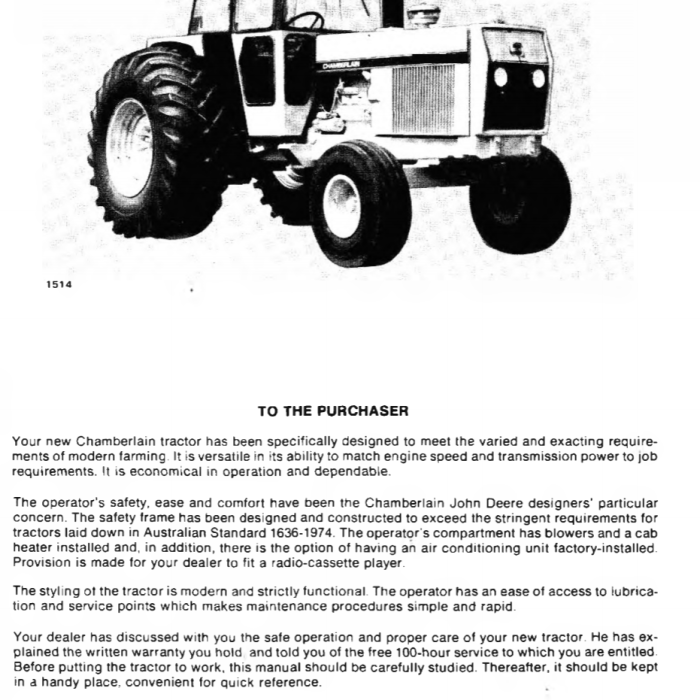
YOUR CHAMBERLAIN TRACTOR INFORMATION PAGE.

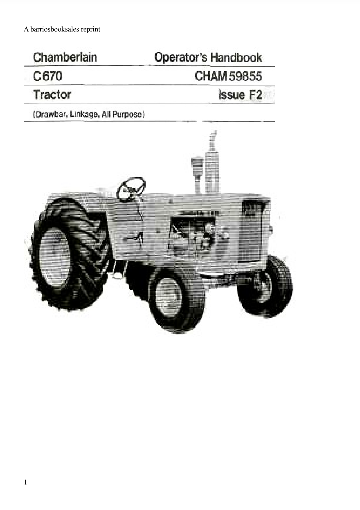
Have you ever wondered just how many different models there were of the famous “Chamberlain” tractor?Well I did some research and have come up with the first being put into production in 1949, it was the 40K…. 1950 came the 40KA …In 1952 came the 60DA …which at the time was the most powerful tractor in its class in Australia. 1954 saw the production and sales of the 45KA… the 55KA the 55DA and the Super 70.90. …

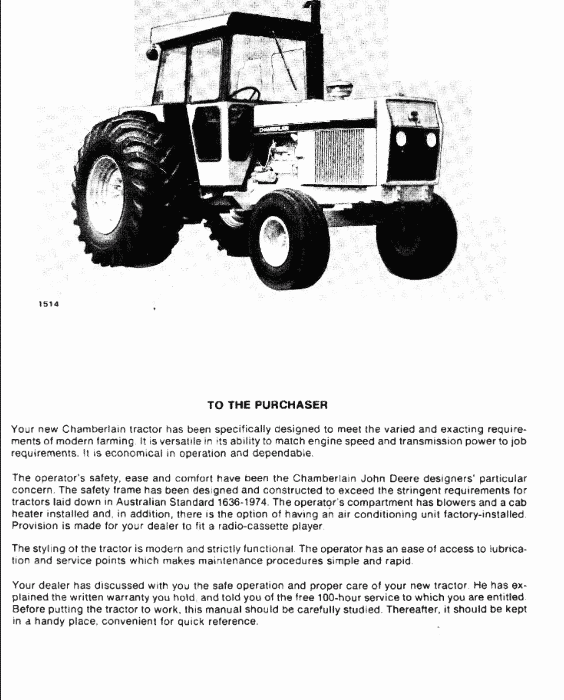
1955 heralded the famous Champion series. “Tail end Charlie” being one of the first off the production line… going down in history as a part of the “Redex” trials along with “Gelignite Jack”.1957 saw the introduction of industrial tractors, many were put to use as the power plants for front end loaders and backhoes.1958 saw the introduction of the 9G Champion it had 9 speeds whereas the earlier Champion had 6 speeds.Hence the “9”. … The Countryman mk1 also appeared in this year; along with the industrial tractors the “Chieftain” and the “Commander”The Canelander and the Crusader was on sale by 1959. …1960 saw the Countryman Mk11. and the Mark111 was produced in 1961 …The Champion 306 came out in this year as did the Countryman 6 and the Countryman 345 …The Champion 236 came out with 3 point linkage in 1970.The C456, the Champion C670L and the Countryman C6100 were in production until 1975 …

This was really the end of the REAL Chamberlain tractors…. Many engines were used over the years 1948-1975 amongst those that were not Chamberlains own engines, the company used products mainly from Perkins…but GM diesels were used as was the Meadows… Many Hybrids existed that had other engine...We have about 12 different manuals/books for the early Chamberlain tractors.

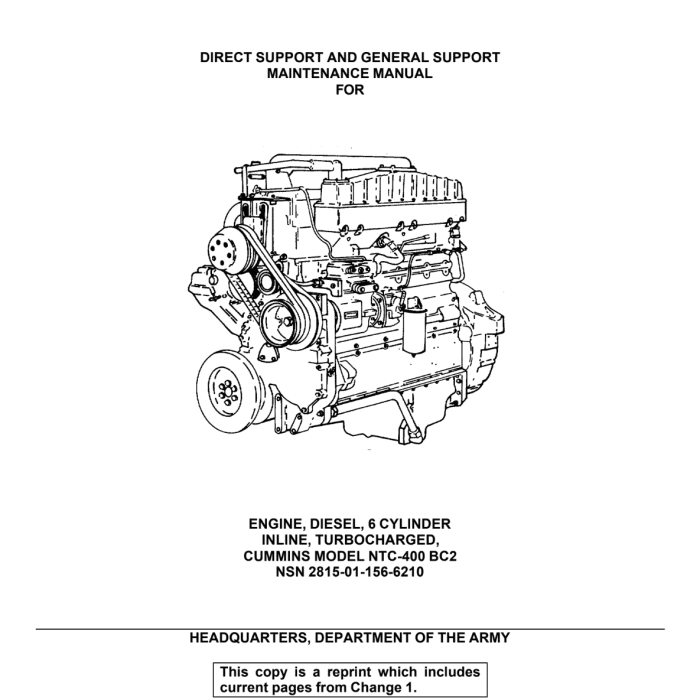
Below find an up todate list of barriosbooksales publications.Allis chalmers parts catalogueAllis Chalmers WCAlston windmill instruction bookBeaver Backhoe parts catalogueBOBCAT service manualBriggs & Stratton service manuals.Case workshop manualCase workshop manualChamberlain 306 Parts CatalogueChamberlain 40 K- 40KA service manualChamberlain 40 K handbookChamberlain 4080 parts cataloguechamberlain 40K handbookChamberlain 4280 parts catalogueChamberlain 6C100 operatorsChamberlain Canelander service manualChamberlain Canelander, Crusader, 9G service manualChamberlain Countryman Mk 3 parts catalogueChamberlain Countryman parts catalogueChamberlain HydraulicsChamberlain kerosene tractors, parts catalogueChamberlain service manual for super90 & 70, 60DA & 55DChamberlain steering workshop manual.Chamberlain super 70 parts catalogueChamberlain super 70 operators manualChamberlain super 90 parts catalogueChampion 90.70.60DA.55D workshop manualChampion 9G parts catalogueChampion 9G workshop manualCountryman mk 1.2.3 workshop manualCommer R741 workshop manualCummins model NTA-855-L4 operating & maintenance manualCummins fuels systems 1966?Cummins model NTC-290 workshop manualCummins model NTC-400,M915-M920 & M915A/big cam 1 M1915A1& MCummins model NTC-400BC2. turbo charged 1985Cummins model V903C workshop manualCummins V8-300 repairs & maintenance .Cushman cub instruction & spare parts manualDavid Brown 3 cyl workshop manualDavid Brown Cropmaster operators manualDavid Brown Hydraulic repair manualDavid Brown instructing manualDavid Brown selectamatic gearbox workshop manualDavid Brown service manualDavid Brown synchromesh transmission repair manualDeutz engine workshop manualDodge,Fargo,Desoto workshop manualEarly chainsaw Carburettors service manualEarly Ford V8 & 6 cyl service manualEarly Villiers 2 stroke enginesEarly Villiers 4 stroke enginesElectric Axle shift, shop manualElectric starters workshop manualFarmall Cub-Cublo-boy service manualFarmall H service manualFarmall service manualFerguson 65 & 50 series workshop manualFerguson TE-A20 & TE-D20 workshop manualFiat 1000 workshop manualFiat 1000, 950, 850, 800 workshop manualFiat 1300 operators manualFiat 1300 workshop manualFiat 411Rb instruction manualFiat 615 operators manualFiat 615 parts catalogueFiat 640 operators manualFiat service instruction manualFord 1000-1600 service manual.Ford 7000 operators manualFord 8000 series workshop manual.Ford 60-65 workshop manualFord Commander 6000 operators manualFord Commander 6000 workshop manualFORD TRACTOR workshop manualFordson Dexta handbookFordson Dexta service manualFordson Major Diesel Engine handbookFordson Major parts catalogueFordson major super & new series parts catlalogueFordson Major workshop manualGas Producers for motor vehiclesGeneral chainsaw carburetion service manualGM 2 stroke service manualGM Parts catalogueHonda GX340 service manualHonda small engine service manuals.Honda stationery engines vertical shaft workshop manualsHonda stationery engines workshop manualsHonda. small engine service manualHow to build a drilling rigHow to change gears in a truck... Rangerover typesHUSQVARNA chain saw workshop manualsIHC. Twine & wire balers 430/440 operators manualInstruction manual for Dodge AT4 series trucksINTER 1466 tractor operators manual.INTER 4366 tractor operators manual.INTER ENGINE WORKSHOP MANUALInter tractor 4366 parts catalogueInter tractor service manual for 14 - 18 - 20 enginesInter tractor T9-TD9 parts catalogueInternational 4166 operators manualInternational tractor instruction manualJohn Deere 3020 workshop manualjohn deere Parts catalogueKL BULLDOG PARTS CATALOGUEKohler carby service manualKohler small engine service manuals.Kubota engine shop manualKubota tractor instruction manualKubota tractor workshop manualLandrover series 1 operating maintenance manualLanz BULLDOG service manualsLISTER ST & STMA parts catalogueLombardini workshop manuals.Massey Ferguson 135 - 148 hydraulics etc manual Massey Ferguson 20 Baler Massey ferguson 35M/F 50-65 workshop manualMassey Ferguson 135 - 148 workshop manualMassey Harris 30 & 30K parts catalogueMassey Harris 44K service manualMassey Harris service manualMcCormick AWD6 service manualMcCormick Deering 1.5hp engine instruction bookMcCormick operators manual 523 + 624 tractor.Meadows engine workshop manual as fitted to chamberlain tractorNew Fordson Major instruction manualNuffield HandbookOliver 1450 operators manualParts catalogue for Perkins 4.326 diesel enginesRobin engines service manual.Sachs small engine service manual.Servicing the 1962 Chamberlain tractor engineSTIHL chainsaw Instructions & parts cataloguesSuper Fordson Major instruction manualTD-18A operators/maintenance manualTEA Ferguson instruction bookTHE AUSTRALIAN WINDMILL`S OFFSIDERThe Chamberlain Industries machinery manualTHE DMD Battery restorer.The ENGLISH WHEELToyota 2H-12HT engine workshop manual.Toyota Landcruiser workshop manualVintage BSA service manualWisconsin service manualWisconsin- Robin. small engine service manualWorkshop manual Honda & RobinWorkshop manual Mack truck 1965-1975Know your veteran MAGNETOBuild your own preWW2 design camping trailer CHAINSAW MANUALS many makesKnow your low & high tension Ignition coilsThe T Model Ford servicing manual

BSA industrial instruction manualInternational tractor fuel service manualWico magneto servicing

How to - Shoe a horse Allison Service manual chamberlain supplement for the 40K,40KA,45KA,55KA,55DA Massey Ferguson 135 - 148 Clutches & transmissions manual FERGUSON HYDRAULICS ETC Briggs & Stratton . small engine starter methods

Inter CUB parts catalogue Veteran vehicle wiring1914 gas engines.The air conditioning manualDrilling mud manualMotor cycle carburetionWindmill creationsComposting toiletsEarly Victa lawn mower workshop manualSachs enginesNorton early motorcyclesMatchless motor cyclesVintage Alvis data.Ferguson TEA operators manualField Marshall Parts catalogueField Marshall Maintenance manual Vintage carburettorsAlcohol fuelsHow to use a chainsawMany David Brown manuals ask?Many fiat manuals ask?Ford cars 1932-49 maintenance manual Ferreting for funVeteran motor cycle manual. large.Veteran Vyce engineering large bookJCB loadall workshop manualChev V8 diesel trouble shootingChev V8 diesel workshop manual 6.2 & 6.5LYamaha service manualThe metal shaperAdvantages of using DTHH in drillingAlloys the bookChainsaw carburettorsCommer R741 workshop manualHow old is that car? Covers all cars sold in Australia from 1923 to 1949.Identication & specsKohler engine manualsDodge truck workshop manualsHow to make Cement block makerHow to make a DIYS dump truckHow to make a Bale loader & elevatorHow to make a cement mixerHow to make a super spreaderHow to make vintage childrens vehiclesToyota 2H engine workshop manualThe wire rope manualMercededes Benz car manualsBSA a7/A10 workshop manualSusuki jimmy diesel workshop manualRyobi repair manual 2004


CLICK HERE TO BUY A MANUAL!

The 40K was the first Chamberlain tractor to be available in any quantity. It used Power kerosene as its fuel, you started it on petrol.

The model 40KA came out in 1950 between 1952 and 1955 saw quite a few new models many were made by this time with diesel engines. 1955 brought in the famous Champion series the first being the champ 6g then the well known 9G.Most famous of these was Tail end Charley in the Redex trials. The first of the Countryman was also available after 1956 and by 1960 the Canelander and the Crusader were working on farms.
3 options for this manual
There were quite a few other models produced up until John Deere took over... but that was the end of the Australian Chamberlain,;those that came after 1975 were JD in disguise. Some information about the 40K tractor

Chamberlain 40K….ENGINE:Two-cylinder horizontally-opposed side valve four-stroke.Fuel: Kerosene (petrol start).Bore- 6-1/8 in.Stroke: 6-1/4 in.Gross dynometer horsepower 48.5 at 1,200 R.P.M.Bearings: Main-—heavy duty ball. Big-end—-replaceable steel backed white metal precision type, 3-3/4 in. diameter x 3 in. long.Crankshaft: Fully counter-weighted, drilled for full-force feed lubrication to big-end bearings.Connecting Rods: High tensile alloy steel, drop forgings., drilled for full pressure lubrication to gudgeon pins.Cylinders: Special nickel alloy cast-iron, fitted with hardened valve seat inserts: valve guides are special cast-iron.Lubrication: By submerged type gear pump of large capacity, delivering oil through drilled passages to crankshaft. . A spring loaded by-pass valve is provided set to 45 lb. per square inch. An easily removable strainer is providedFor the suction line of the pump. A heavy duty tractor type oil filter with replaceable cartridges is provided.

Electrical: Twelve volt starting- and lighting system. Ignition: High tension magneto with delayed-impuJse coupling. Cooling: Thermo syphon system using large diameter header pipes of ample height for efficient circulation. Radiator of heavy duty tubular type with cast iron top and bottom tanks. Ample cooling capacity is provided and is controlled by radiator shutters, operated from the driving seat. A water heat indicator is provided on the instrument panel. Fuel Tank Capacity: 23 Imperial gallons. Petrol Tank Capacity: 3.5 Imperial gallons. CLUTCH:Over-centre type, driving plate is carried by involute splines in fly-wheel ring gear. A ball-bearing clutch release collar is provided. Clutch operation is by conveniently placed hand lever, which also permits operation from behind tractor platform to facilitate coupling up of Implements…. Extract from the 40k handbook.

OPERATING INSTRUCTIONSBEFORE STARTING THE NEW TRACTOR.The new owner should make himself thoroughly conversant with all controls. Study the diagram and the tractor itself until you are thoroughly conversant with the action of each of them. Lubricate entire tractor, using the Lubrication Chart of this book as a guide. Check oil in air cleaner. Check level of engine oil. Remove dipstick, wipe clean and replace, then remove again to obtain correct level. This must be done with the tractor reasonably level and the engine stopped. If oil is below the LOW mark it is dangerous to start the engine, and oil of the proper grade must be added to raise the level to HIGH.Check level of oil in gear box by removing large plug in rear cover (in front of rear platform). Oil should be within half an inch of lower edge of hole. Replace plug. Be sure that both fuel taps are off. Add sufficient fuel to both tanks. The kerosine tank is the one nearer the front of the tractor, the petrol tank is the one nearer the driver. Check tyre pressures.Remove radiator cap and fill radiator with water. To remove cap, screw to left several turns until a check is felt, lift cap and move sideways a little to clear one end of clamp bar. The whole cap may then be lifted off. Use only clean water in radiator—rain water is best Never use dirty or muddy water, the sediment will settle out and may ultimately block the tubes and cause overheating.TO START ENGINEPlace one or both gear levers in neutral position and pull hand brake on. Disengage clutch by pulling lever right back. Close radiator shutter. 'Open drain cock on carburettor bowl and let a few drops of fuel run on to your hand. Ascertain by the smell of this that the engine has been stopped on petrol and not kerosine. If kerosine s in the carburettor, starting may be difficult and the carburettor must be completely drained. Place manifold heat control in No. 1 (Hot) position. Turn on petrol tap about two turns. Both fuel taps must never be turned on together as this would allow kerosine to flow into the petrol tank :- vice versa, whichever is at the higher level.Lift governor control lever about 1 !/2 " up from bottom of quadrant.Pull choke control out, press ignition switch down and the controls are set ready to start the engine. If the starter button is pulled out the engine should start at once. If engine does not start atonce, push choke control halfway in and try again. Do not continue to crank engine with choke right out. If engine fails to start after several tries, consult list of possible causes Push choke button in as soon as engine fires or the engine may become over choked and be hard to restart. If this happens, press choke knob right in and pull out starter again. In cold weather it may be necessary to leave choke control out slightly from the full open position for a minute or two. Press the choke button right in as soon as the engine will run smoothly that way.Check oil pressure and generator charge readings. As soon as the thermometer needle moves past 100°. the tractor may be put into use, but should not be changed over to kerosine operation until 160° is reached. To change to kerosine, screw the petrol tap to the right as far as it will go and open the kerosine tap about two turns. The radiator shutter control should now be slightly opened. When the tractor is working, this shutter control is used to keep the water temperature between 160° and 180° for most economical operation. The correct adjustment of manifold heat control and carburettor must also be found for best economy. See Fuel System. The engine should never be run at slow idle on kerosine, and should not be switched off with kerosine in the carburettor unless it is to be started again almost immediately. Before stopping the engine it is good practice to change over to petrol (shutting off kerosine tap before turning on petrol) and running engine with governor lever half way up for at least three minutes before switching off. This clears kerosine out of pipe line and carburettor bowl and will help to ensure easy starting. It is good practice to see that both taps are turned off before leaving tractor.

DRIVING THE TRACTORWith engine running and warmed up, pull clutch operating lever back to its fullest extent.Move forward and rear gear levers into correct positions to engage the required gear making sure that levers are moved the distance until the selectors are felt to click into place. If gears will not move into place, return to neutral, push clutch lever forward slightly so that gears slowly revolve. If gears grate, pull clutch lever further back and try again.When gears are engaged move governor control lever to halfway position, disengage hand brake and move clutch lever forward smoothly until the tractor picks up speed, then press the lever firmly forward until the clutch is felt to snap into full engagement…extract from the 40k workshop manual.

TAPPET ADJUSTMENT for the 55D and 55DA tractors.The valves are operated from the camshaft through cam followers, push rods and overhead rocker arms, the latter being provided with the necessary adjustment for manufacturing tolerances, wear, etc., by means of a screw and locknut. To ensure that the valves always seat correctly it is necessary to have a clearance between the valve stem and the rocker when the valves are closed and on the 55D and 55DA models this clearance should be between .016 and .020 in. when the engine is cold. A gauge of the correct thickness is supplied in the tool kit.When checking the clearance it is important that the valves are in the closed position and this may be determined as follows:—Remove both cylinder drain plugs found on the underside of the cylinder heads and place governor control lever in stop position.To remove valve rocker covers, loosen back the retaining setscrew in external rocker shaft bracket and withdraw shaft clear of cover. Remove seven sst-screws from each cover and remove cover, taking care not to destroy the gasket. Take each cylinder separately and hold a finger on the inlet (front) rocker while someone turns the engine over slowly with the crank handle. The rocker will open the valve and when the valve has returned to its sect, turn the engine about another quarter turn, when both valves of that cylinder are fully closed. Clearance may now be checked by inserting feeler gouge between vafve stem end rocker of intake and exhaust valves and between valve stem and adjusting screw of volve to starting chamber. Repeat for opposite cylinder. If adjustments must be made, use spanner and screw driver supplied in kit. After adjusting, tighten locknut firmly against rocker and finally check as described above. Extract from operators manual.

COOLING SYSTEMKerosine models and 55DA Tractors

DESCRIPTIONThe cooling system functions to dissipate excessive heat and to maintain the engine at an efficient workingtemperature.The type of system employed is known as the thermo-syphon system, which has the advantage of allowingthe engine to heat up rapidly and is free from troubles associated with the working parts of a water pumpsystem.In order to assist in the rapid warm up and to operate over a wide range of temperature and workingconditions, a set of radiator shutters controlled by the operator, is added to the system. The watertemperature should be kept between 160° and 180° F. for most economical conditions, by use of the shuttercontrol.The flow of water is accomplished by the transference of the heat of combustion to the water jacketssurrounding the combustion chamber and cylinder walls. As the water absorbs this heat it rises and iscarried to the radiator top tank, allowing cool water to enter the jackets from the radiator bottom tank. Thehot water passes down the radiator core and the heat is extracted by means of the air blast created by thesuction fan.

Fan and Pulley:The six bladed fan is attached to a pulley which is carried by two angular ball bearings. The assembly isdriven by a V-type fan belt from the crankshaft. The pulley shaft is retained to the fan bracket by a large nutand the bracket is slotted to permit adjustment of the fan belt tension by an adjusting screw.

SPECIFICATIONRadiator type .. Tubular core, cast iron tanks andside supports.Circulation ., ,. Thermo-syphon. Heal Regulation .. Manual controlled radiator shutter. Capacity .. .. 12 gallons.Fan type .. ..6 cast aluminium blades, 18" dia. Fan Speed .. ..

Approx.: 2000 r.p.m. (40KF 40KA,45K, 45KA);

2400 r.p.m. (55KAt 55DA); at 1200 Engine r.p.m. Fan Drive .. ., Vee belt from Crankshaft, Belt Adjustment ., Vertical slot in fan pulley mountingbracket.

MAINTENANCEIn order that the system may function efficiently it is essential that the water and air passages be free from obstructions and periodic attention should be given to the cooling system to ensure this condition. Cleaning of the radiator air passages can be carried out effectively by means of air pressure applied to the rear of the core, or in the event of suitable equipment being available, a jet of water may be used to advantage.A grease nipple is provided behind the belt pulley and a grease gun filled with good quality chassis (or multipurpose) grease should be applied weekly. Over lubrication should be avoided, but in the event of this occurring a small spring loaded valve is fitted to the fan hub.

Note: At temperatures above freezing, the cooling system should be filled with clean, soft water plus a good commercial rust inhibitor. Hard water will form scale in the radiator, cylinder blocks and heads. These scale formations cause hot spots within the engine and clog the tubes in the radiator core, thus restricting the flow of water and causing overheating.

ADJUSTMENTThe fan belt should be neither too tight nor too loose. Too tight a belt imposes undue load on the fan bearings and shortens the life of the belt. Too loose a belt allows slippage and lowers the fan speed. Adjust the belt by loosening the large clamp nut on the rear end of the fan shaft, adjust to the correct tension with the vertical adjusting screw through the shaft behind the pulley, tighten the clamp nut and recheck the tension….extract from workshop manual for tractors mentioned above ….barriosbooks sell reprints of most Chamberlain tractor manuals such as operators handbooks, workshop manuals, service manual and parts catalogues;To buy go to the OZTION auction website at www.oztion.com.au look for the barriosbooks online store.

Extract from Champion 9G handbook.DRIVING THE TRACTOR: As will be obvious from the speed chart given in the specifications, the high range of gears are intended primarily for transport purposes, whilst the low range . is for implement working. Before moving off select the range with the rear gearbox lever. The gear ratio of the front gearbox may be changed with the tractor in motion in the same manner as the gears of a motor truck may be changed by double declutching. The tractor should not be put into heavy service until it has reached the normal operating temperature.When using the tractor at high speeds it is advisable to leave the hand governor control in the closed position, and to use the foot pedal. By doing this the braking effect of the engine to reduce speed may be used to best advantage. When working with an implement, set the hand lever to the required speed, and the foot pedal may be used to give extra power through any tough spots.The advantages of the "live" P.T.O. will quickly make themselves obvious when it is required to vary the tractor speed and the implements mechanism speed independently. With a little practice the operator will readily realise the saving in time and energy given by this device. ALWAYS LATCH THE FOOT PEDALS TOGETHER BEFORE TRAVELLING AT HIGH SPEEDThe Perkins Diesel Model "Four 270D" has direct injection, distributor type fuel injection pump, mechanical governor, diaphragm type lift pump, self-indexing starter motor, thermo-start cold starting unit and a key start. A full description and maintenance procedure is given in the accompanying Perkins literature, although the regular maintenance procedure is covered on the chart in the centre of this book. The air cleaner fitted is an oil bath type with a centrifugal pre-cleaner. These units are mounted side by side behind the engine bulkhead. There is no provision for maintenance of the pre-cleaner as this unit is self-emptying. The regularity of maintenance to the oil bath depends entirely on the conditions under which the tractor is operating. The importance of preventing this unit from becoming inefficient cannot be over-emphasised, as the economical life of the engine is largely dependent on its correct maintenance. To service the air-cleaner, release the latches on the offside of the top cowling. Raise the top cowl and allow it to be supported by its stay. Release the latch on the side cowl and slide the cowl forward andfree of the locating pins. The clips retaining the air cleaner bowl are now accessible and the bowl may be released, lowered and moved sideways clear of the tractor. Clean out the oil and dirt in the bowl, refill with engine oil to the marked level and refit to the body of the air cleaner. Under some conditions once every 50 hours will be sufficient for this service but when working in very dusty conditions it may be necessary to clean the bowl every 10 hours.

BELT PULLEY: A belt pulley is mounted on the side of the P.T.O. unit,and is controlled by the P.T.O. clutch. Pulley—101 inch diameter x 7|- inchwide. Belt speed—3,100 feet per minute at 1,600 Engine R.P.MTYRES: Standard 15 inch x 28 inch rear.Standard 7.50 inch x 18 inch front. Optional 14 inch x 28 inch rear. Optional14 inch x 28 inch duals—rear.MINIMUM CLEARANCE (Front Axle): 16 ¾ ".WHEEL BASE: 94".MAXIMUM TORQUE: 182 ft. Ibs. at 1,000 R.P.M.DRAWBAR H.P. (MAX.): 45.RATED DRAWBAR H.P.: 33.75.DRAWBAR PULL (MAX.): 6,150 Ibs.FUEL TANK CAPACITY: 19 Imperial Gallons.FUEL CONSUMPTION: Farm Work: Light loading, ¾ gallon per hour.Heavy loading, up to 1 1/2 gallons per hour. Road Work: Approximately18-20 miles per gallon.WEIGHT: Basic Tractor 7,125 Ibs….extract from the 9G handbook.